
Platform capability
One dashboard. Every device that matters.
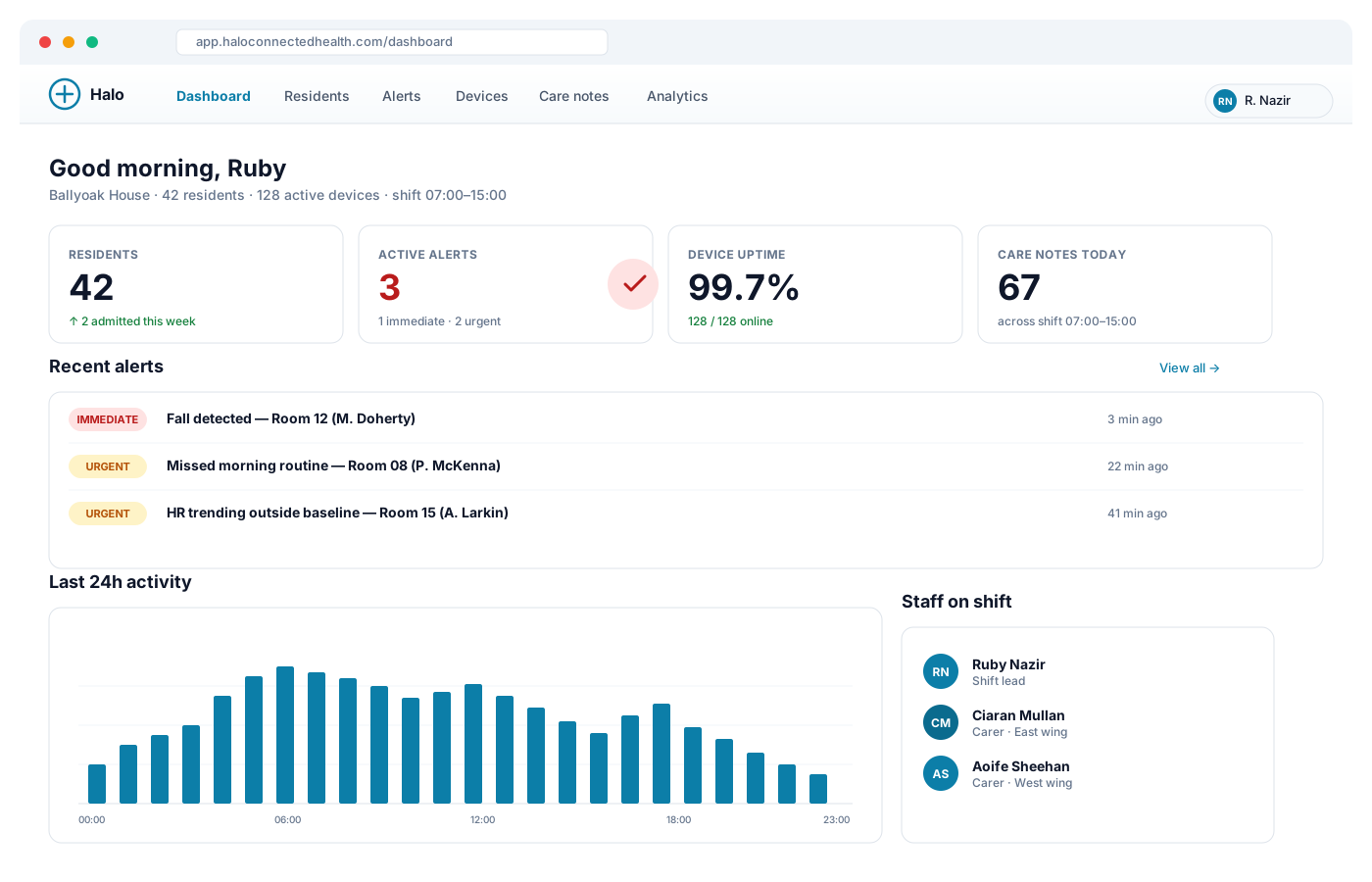
Halo integrates wearables, room sensors, bedside monitors, and environmental sensors into a single adaptive view — configurable per resident, per room, per shift. Open device support: bring the hardware you already trust or use ours.
Device categories supported
Wearables — wrist wearables, pendants, low-frequency vitals. Fall detection, heart rate, activity, location within the property.
Room / motion / presence — PIR sensors, bed-occupancy sensors, chair-occupancy sensors, door sensors. Non-camera, non-audio. Report presence and activity patterns without capturing identifiable information.
Bedside monitors / continuous vitals — continuous blood pressure, respiration, high-frequency wearables, medical-grade monitors where clinically indicated.
Environmental / safety — carbon monoxide detectors, smoke detectors, air-quality monitors, temperature monitors, door-state sensors, medical-device alert forwarders.
Full device compatibility list available on request. If a device you use isn’t listed, tell us in the demo — we build integrations against the device manufacturer’s SDK or open API.
How the integration works
Halo speaks the manufacturer’s native protocol wherever possible:
- BLE and Zigbee for consumer and prosumer hardware
- LoRaWAN for site-wide low-power sensors
- HTTPS webhooks for cloud-connected devices with modern APIs
- HL7 v2 for legacy medical device outputs
Data ingested is normalised into Halo’s internal event model, so downstream — alerts, care notes, dashboards, exports, integrations — all see the same shape regardless of manufacturer.
Firmware and calibration: on rented hardware we handle updates centrally. On customer-owned hardware we advise on update cadence.
Battery and connectivity: every device reports health and connectivity. Alerts fire before a device goes silent, not after.
Configuration per resident
Not every resident needs every device. Not every device needs every alert. Halo lets you configure per resident:
- Which devices are attached
- What thresholds apply (or use the adaptive baseline once learned)
- Who receives which alerts and when
- Quiet-hours and DND overrides
- Consent scope for each data category
Change any of these in seconds; the audit trail records who changed what and why.
Pricing model
Per-device monthly fees are the line that scales with fleet size — because event ingestion, alert processing, and storage genuinely cost more with more devices. See pricing for the current rates. Ballpark:
- Wearable / low-telemetry: £1.50/device/month
- Room / motion / presence: £2.00/device/month
- Bedside monitor / continuous vitals: £4.00/device/month
- Environmental / safety: £0.75/device/month
Hardware itself can be bought outright or rented — see the pricing page for the buy vs rent tables.
Related
- Alerts & Escalation — what happens when a device triggers something
- Audit & Compliance — every device event is logged
- Care Notes — device data feeds structured observations