
For home care agencies
What happens between visits, in the visit report.
Home care agencies deliver scheduled hours. Halo covers the hours in between — passive monitoring across the whole home so managers, care coordinators, and family see what happened overnight, this week, and this month. Not more visits; better visits.
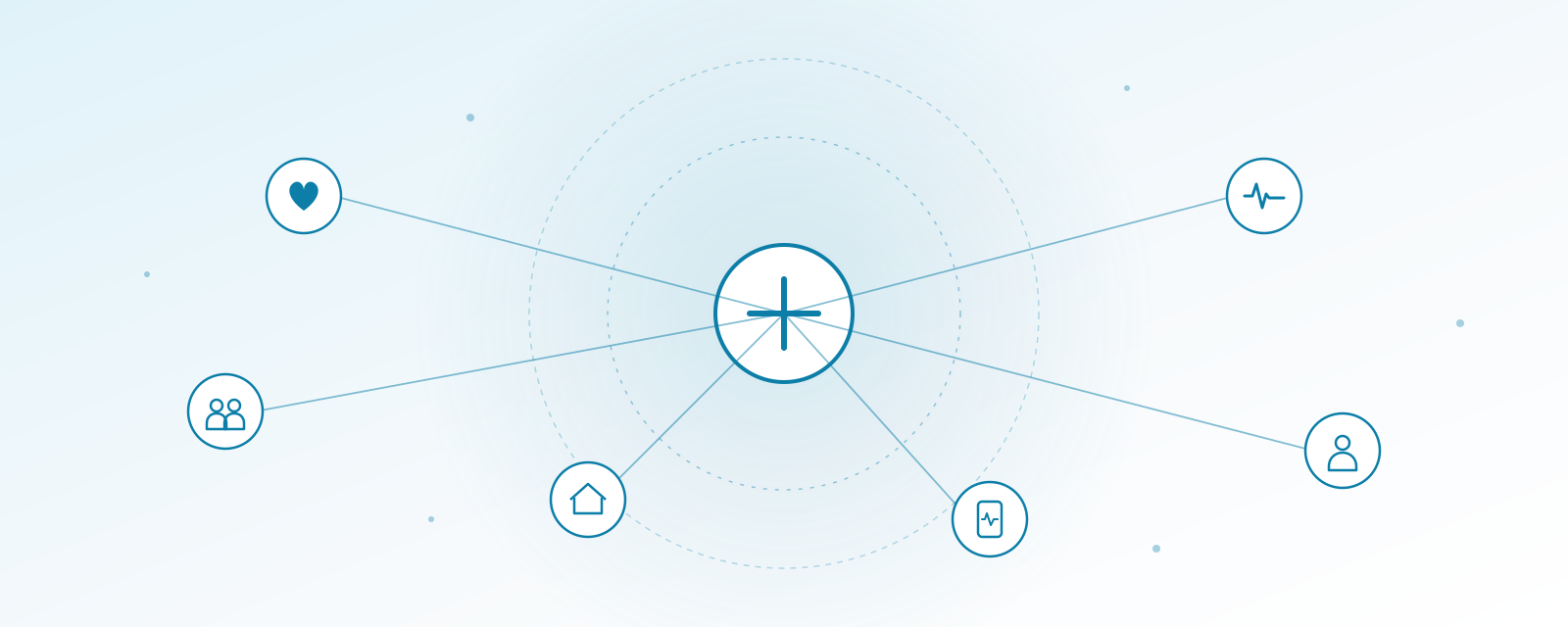
What Halo covers for home-care agencies
- Between-visit monitoring — activity, sleep, movement patterns, environmental alerts across the whole home
- Missed-visit safety net — if a scheduled visit is missed and the service user hasn’t moved in an unusually long window, alerts route to the on-call manager before it becomes an incident
- Care-visit context — carers arriving for a shift see what happened since the last visit, so they can address changes rather than starting from scratch
- Family invitation — with consent, family members can be invited to see wellbeing summaries. Reduces “how is mum?” calls to the office
- Ongoing wellbeing trends — patterns worth mentioning to the GP, community nurse, or in the next care review — often visible weeks before anyone would notice on visit alone
What it changes operationally
Fewer emergency call-outs: catching a deteriorating pattern early is cheaper (and safer) than responding to an incident.
Better care reviews: care plans updated on real data, not last-visit impressions.
Family retention: families are the ones who pay privately-funded home care. Halo gives them a reason to stay with your agency instead of moving to a home.
Insurance and compliance: Halo’s audit trail supports CQC evidence for Regulation 17 (good governance) and the safeguarding duty under the Care Act 2014. Documentation available on request.
Staff safety: lone-working alerts and end-of-visit check-ins can be layered on top of the same infrastructure (roadmap).
How it fits into home-care operations
Halo is designed to sit alongside your existing systems:
- Runs independently of your rostering / CRM — no forced migration
- Integrates via API where you already have one (Access Care Planning, Nourish, Log my Care, Person Centred Software, and others)
- Alert routing per service user — different escalation contacts for different clients
- Managers see the fleet view; care coordinators see their caseload; carers see the person they’re visiting
- Family portal (when shipped) — invitation-only, consent-gated
Pricing (illustrative)
A typical home-care agency setup on the modular pricing model:
- Platform: Starter £49/mo or Pro £199/mo (multi-caseload)
- Per service user: £4/mo (Starter) or £6/mo (Pro)
- Per device: from £0.75/mo (environmental) to £4/mo (continuous vitals)
- Install per site: £650 first, £350 subsequent
For a single service user with 15 devices, the Family bundle at £129/mo all-in is usually a better fit — offer that route to privately-funded families and take a partnership margin on installs.
Related
- For families — what your service users’ families see
- For clinicians — the GP / community nursing view
- Care homes — for the residential setting
- Supported living — for supported-living schemes