
For supported living
Support without the intrusion.
In supported-living schemes — for adults with learning disabilities, autism, mental health support needs, or complex physical needs — the balance is real independence with real safety. Halo does the safety layer quietly, so support workers can spend time on relationships and support planning instead of check-ins.
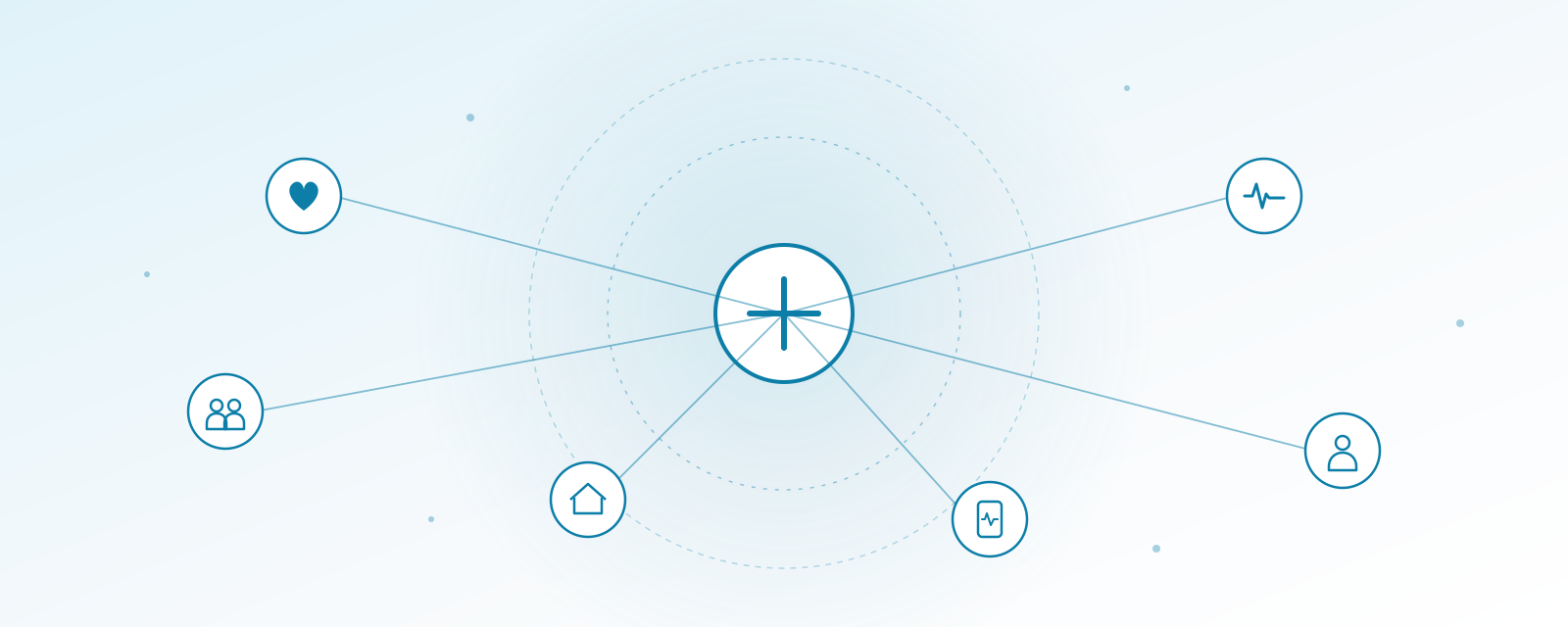
Halo in a supported-living scheme
Typical setup for a 30-flat scheme, one building or a cluster:
- Per-flat presence and activity sensing — quiet, non-camera, non-audio
- Environmental monitoring — CO, temperature, smoke, front-door state
- Optional wearables for individuals with specific health needs — falls, cardiac, seizure
- Shared communal spaces — occupancy sensing and safety monitoring
- Staff view — one dashboard of the whole scheme, with alerts routed by care plan and time-of-day
- Individual privacy — each tenant sees what’s being monitored about them and can adjust with support
Why it fits supported living specifically
Person-centred by design: Halo is configured per tenant, not scheme-wide. Someone who wants passive monitoring only gets passive monitoring. Someone with epilepsy who wants seizure alerting gets it. No one-size template.
Reduces intrusive checks: 15-minute wellbeing checks are onerous for staff and dignity-diminishing for tenants. Halo gives the reassurance of “yes, still okay” without the door-knock.
Supports mental-capacity considerations: consent state is tracked per tenant per feature. If capacity changes — as it may in fluctuating conditions — decisions are documented alongside the monitoring.
Safeguarding evidence: continuous monitoring, immutable audit trail, and pattern analysis support Care Act 2014 safeguarding responsibilities and any subsequent investigation.
CQC-ready: audit-by-default supports Regulations 12 (safe care and treatment) and 17 (good governance).
Deployment shape
Typical supported-living scheme deploys as:
- Pro tier (multi-flat requires per-resident alert profiles)
- Rented hardware for opex predictability
- First site install £650, subsequent flats added at £25/device
- Family portal invitation where tenants want it
Full worked example for a 30-flat scheme: see supported-living pricing — around £1,271/month all-in plus a one-off install.
Related
- Home care — for domiciliary services
- NHS & ICS — commissioning supported living from ICSs and HSCNI
- Compliance — full posture
- Audit & compliance — the safeguarding evidence layer